World Cup, June 23 is already marked as a pressure point on the 2026 tournament calendar, even before the competing teams are known. The expanded 48-team competition in the United States。Canada and Mexico will place group-stage matches across a crowded summer schedule, and World Cup, June 23 sits close enough to the opening round for early surprises to carry real weight. By that stage, several sides will have played once, some will be chasing their first points, and others may already be treating every goal as a qualification calculation. The first match of a tournament often produces nerves;the second can expose them. That is why World Cup, June 23 has the potential to feel less like a routine date and more like a turning point.Calendar dates rarely become part of football folklore on their own. They earn that status through moments that survive long after the final whistle. On World Cup, June 23 in 2018, Mexico defeated South Korea 2-1 in Rostov-on-Don, a result that strengthened Mexico’s position after its famous opening win over Germany. Belgium then overwhelmed Tunisia 5-2 in Moscow, with Romelu Lukaku scoring twice and Eden Hazard adding two more. Later that evening。Germany appeared to be heading toward a damaging draw against Sweden until Toni Kroos curled a free kick into the corner in stoppage time. World Cup, June 23 was suddenly associated with late goals, attacking ambition and a scoreboard that refused to settle quietly.The 2018 examples offer a useful warning for the next World Cup, June 23. Group tables can look stable at halftime and completely different by full time. A team that dominates possession may still be caught by one direct counterattack, while a supposedly comfortable favorite can spend the closing minutes defending a narrow lead. In practical terms, World Cup, June 23 may be when coaches abandon cautious plans. The second match of a group often forces a decision: protect a point, attack for three。or accept that the tournament’s margins have become too narrow for patience. My own view is that these middle-round fixtures produce better football than opening games because the players have adjusted to the atmosphere, yet the fear of elimination has not fully taken over.
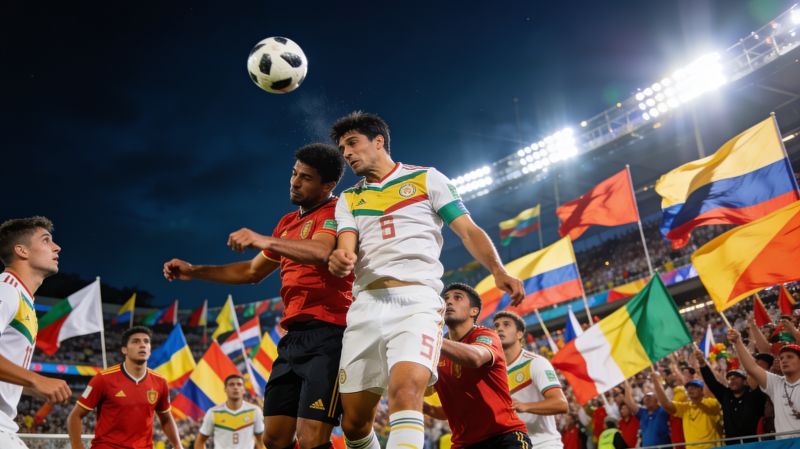
For supporters, World Cup, June 23 will also be shaped by geography. The 2026 edition will stretch across three countries and a vast distance。turning travel, time zones and recovery into part of the competition. A fan watching World Cup, June 23 in Los Angeles may experience a completely different rhythm from one following the same tournament in Toronto or Mexico City. Television audiences will move between matches throughout the day, while stadium crowds will carry local color into a global event. That spread creates opportunity, but it also complicates preparation. Players accustomed to compact tournaments may face long flights, unfamiliar weather and changing kickoff conditions. On World Cup, June 23, those details could matter as much as a tactical diagram.There is also a commercial and emotional dimension to World Cup, June 23. By then, casual viewers who only followed the opening ceremony may have chosen a favorite, bought a shirt and begun arguing about referees in group chats. Broadcasters will be looking for the day’s defining image: a goalkeeper making an impossible save, a young forward announcing himself, or a veteran captain refusing to leave the field. The best World Cup, June 23 stories will not necessarily come from the biggest nations. Football has a habit of handing its loudest moments to teams that arrive with modest expectations. When the 2026 fixtures begin, World Cup。June 23 will be another date on the official schedule. By nightfall。it may belong to a player, a coach or an entire country. That is how a calendar becomes history.