Franz Beckenbauer earned the title Football Emperor through more than elegance and silverware. He changed the position of the defender, turned calm decision-making into a competitive weapon, and gave West Germany a face the world could recognize. When Beckenbauer died in January 2024 at the age of 78, tributes arrived from Munich, Hamburg。London and Buenos Aires. They described a champion, but also a football thinker whose influence reached far beyond the trophy cabinet. The Football Emperor was not defined by shouting or theatrical gestures. He controlled matches with a glance, a measured pass and an instinct for where danger would appear several seconds before everyone else.Born in Munich in 1945。
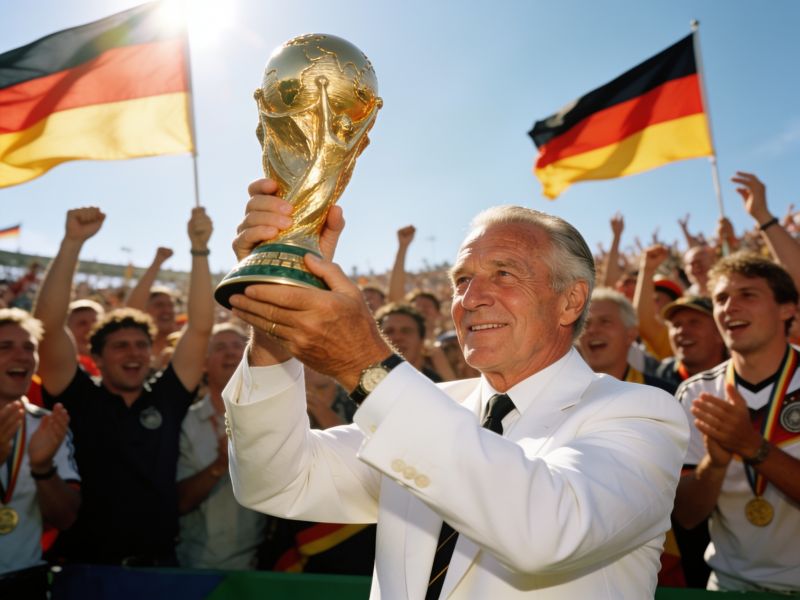
Beckenbauer entered Bayern Munich's senior team as a teenager and soon looked unlike the traditional German defender. He carried the ball out of trouble, switched play with either foot and stepped into midfield without losing his sense of balance. The Football Emperor nickname, widely associated with his German title “Der Kaiser” reflected his regal posture, though the reality was more practical than romantic. Beckenbauer organized space. In the 1960s and 1970s, when many defenders remained close to their goalkeeper, he moved into open ground and invited pressure. That choice could have exposed his team, yet his timing usually turned risk into advantage. Watching him on old match footage, the striking detail is not speed;it is the absence of panic.His defining international moment came during the 1974 World Cup final in Munich. West Germany conceded an early penalty against the Netherlands, then recovered to win 2-1。with Beckenbauer guiding the defense while Johan Cruyff tested every gap. The Football Emperor lifted the trophy as captain, but his leadership was most visible after the match began to tighten. He pointed, adjusted the line and demanded movement without appearing to chase the game. Four years earlier, at the 1970 World Cup in Mexico, he had played through a dislocated shoulder in the semifinal against Italy, eventually losing 4-3 in a match remembered as the “Game of the Century” That image added steel to the Football Emperor legend. He was graceful, certainly, but grace never meant softness.Beckenbauer also built a second career that few elite players could match. As West Germany's coach, he won the 1990 World Cup in Italy, making him one of only three men to win the tournament as both player and manager. The Football Emperor now operated from the technical area, not the center circle。and his methods were quieter than the touchline theatrics later associated with modern coaching. He trusted experienced players, kept the dressing room focused and allowed the team to solve problems on the field. The Football Emperor label became almost unavoidable after that victory, yet it concealed a more interesting truth: his authority came from credibility. Players knew he had faced the same pressure, the same hostile crowds and the same moments when one mistake could define a career.His reputation later became more complicated. Beckenbauer remained a powerful figure in German football, helping bring the 2006 World Cup to the country, but questions surrounding the tournament's bidding process and alleged payments damaged the clean image attached to the Football Emperor. He denied wrongdoing, while investigations and public debate continued for years. That tension matters because sporting icons are often preserved as symbols, then examined as ordinary people with ordinary flaws. The Football Emperor remains a useful name for Beckenbauer's football legacy。not a complete verdict on his life. His real achievement survives in the modern center-back who starts attacks, in the captain who leads without constant noise and in every defender encouraged to look forward rather than merely clear the ball. In that sense, the Football Emperor still has disciples on pitches across the world.