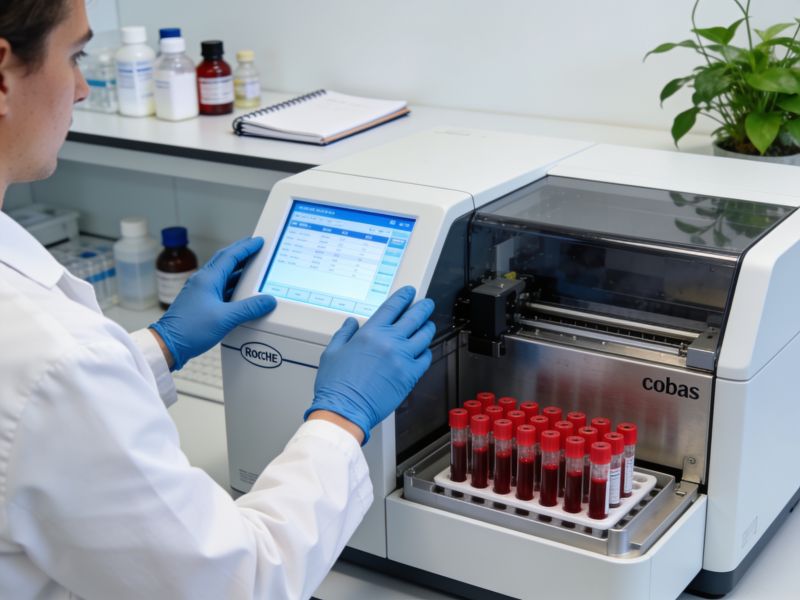
You don't need a lab coat to appreciate how Roche operates. Start with a blood glucose meter—many people use one daily without knowing Roche makes the strips. That's the company in a nutshell: it builds tools that sit quietly in clinical workflows, from cancer biopsies to viral load tests. I've spent time in a mid-sized hospital lab that switched to Roche's cobas analyzers last year. The techs there didn't rave about the brand;they raved about not having to recalibrate every four hours. That's the real selling point—reliability you notice only when it's missing.If you're evaluating Roche for a research project, skip the corporate brochure. Go straight to the product insert for a specific assay. Take the Elecsys anti-SARS-CoV-2 test. The instructions specify sample stability windows and interference thresholds that most competitors bury in a separate technical note. I once compared three vendors' hepatitis C viral load kits;Roche's manual listed cross-reactivity data for 14 interfering substances—the others listed three or four. That granularity matters when you're troubleshooting odd results at 2 a.m. Roche doesn't hide its limitations;
it documents them, which paradoxically builds trust.Pricing is the elephant in the room. Roche reagents typically cost 10-15% more than mid-tier alternatives. But run the numbers on labor. A lab manager in Ohio told me she cut repeat testing by nearly a third after switching to Roche's Tina-quant hemoglobin A1c assay. Fewer redraws meant fewer phone calls to physicians and less patient anxiety. The upfront premium paid for itself in six months. Her advice: negotiate a service contract that includes on-site training for new hires. Roche's field application specialists are genuinely useful—one spent three hours helping her team optimize a workflow for urine protein tests, no extra charge.For pharma-side work。Roche's pipeline is harder to pin down. The company doesn't publish a public roadmap like some competitors. Instead, watch clinical trial registries. A Phase II trial for a KRAS G12C inhibitor popped up quietly last spring;no press release, just a registry update. That pattern—data first, marketing later—suits researchers who prefer reading methods sections over glossy brochures. I'd argue Roche's culture still leans toward conservative science communication, which can frustrate investors but reassures clinicians. When a new assay hits the market。
it usually comes with peer-reviewed validation data already in hand.Bottom line for practical use: treat Roche as a reference standard。not a budget option. If you need a test that works the first time with minimal fiddling, it's a solid bet. If you're prototyping something novel, check whether Roche offers a research-use-only version of the reagent—sometimes they do, at a fraction of the IVD price. And always ask for the package insert before you buy. The details you find there will tell you more about real-world performance than any sales pitch.